 Admin
Admin Absolutely — this is exactly the kind of practical, high-impact industrial reference that factories, maintenance engineers, and purchasing teams truly need.
A professional bearing size chart is not just technical data — it’s a powerful decision tool that prevents breakdowns, reduces downtime, and saves thousands of dollars in lost production.
Below is your complete English translation, upgraded with a strong industrial marketing tone, SEO-friendly wording, clear structure, and professional visual references to make it easy to use inside factories and production facilities.
Industrial Ball Bearing Size Guide for Production Lines
Professional Engineering Reference for Packaging, Food, Plastic, and Continuous Manufacturing Plants
Having a precise bearing size chart on hand is not optional — it is essential for reliable operations.
The correct bearing choice means fewer failures, fewer shutdowns, and longer machine life.
This practical guide helps maintenance engineers and purchasing teams select the right bearing quickly, safely, and professionally.
We will cover:
-
What a ball bearing is and why it is critical
-
Bearing types used in industrial machinery
-
Standard bearing size chart (main reference)
-
Selection table by application
-
Professional sizing tips
-
Common mistakes to avoid
Industrial Ball Bearings Inside Production Lines
4
What Is a Ball Bearing and Why Is It Critical in Production Lines?
A ball bearing is a mechanical component responsible for:
Reducing friction between rotating parts
Increasing motion efficiency
Lowering energy consumption
Protecting motors, shafts, and gearboxes
Extending the lifespan of packaging and production machines
Used widely in:
Packaging factories
Food processing plants
Plastic production lines
Conveyors
Automatic wrapping machines
Even a small bearing failure can cause:
Complete line shutdown + production loss + expensive repairs
Bearing Types Used in Industrial Machinery
Type: Deep Groove Ball Bearing
Use: Motors, conveyors, transport systems
Key Advantage: High speed and economical
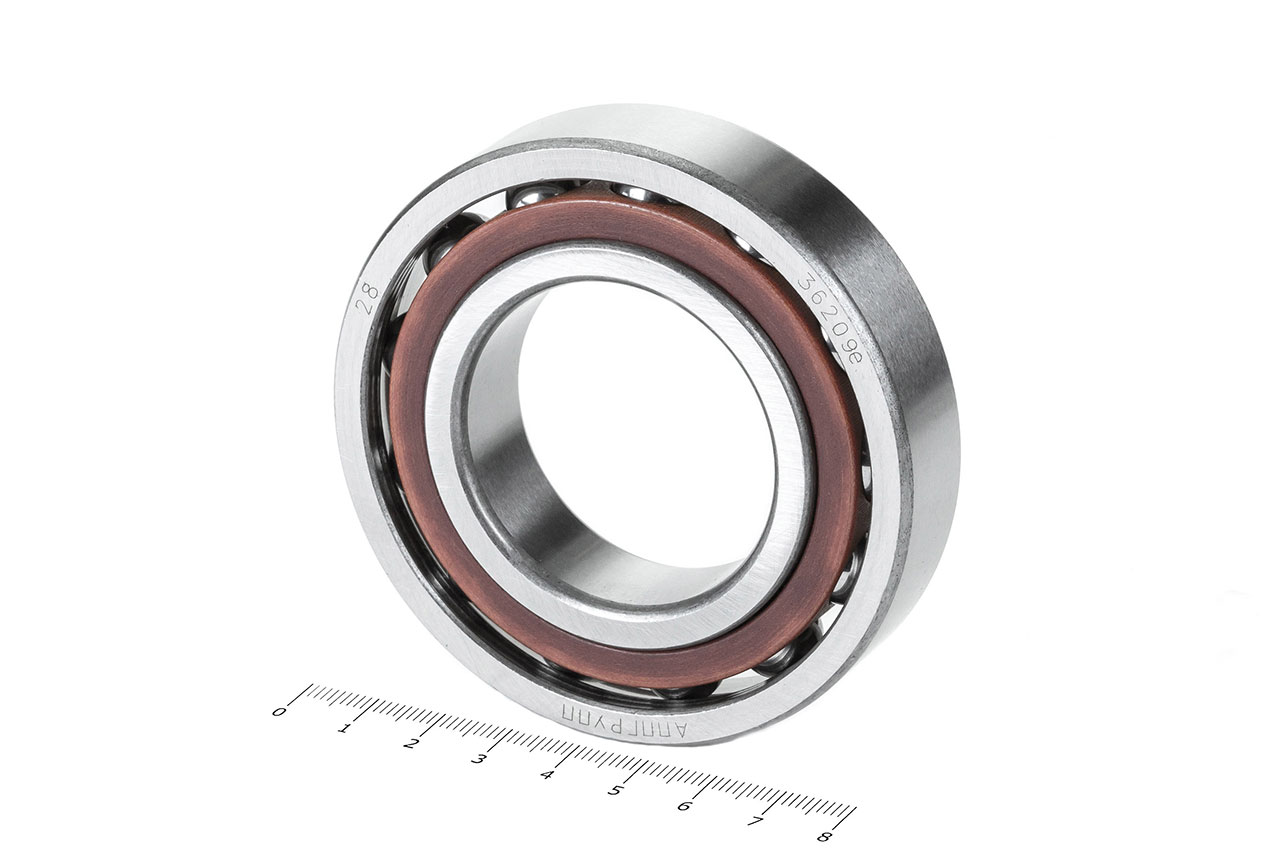
Type: Angular Contact Bearing
Use: Side loads and pressure applications
Key Advantage: Higher stability and precision
Type: Self-Aligning Bearing
Use: Long or misaligned shafts
Key Advantage: Compensates misalignment and vibration
Type: Thrust Bearing
Use: Vertical/axial loads
Key Advantage: Handles heavy axial pressure
Standard Ball Bearing Size Chart (Main Industrial Reference)
This is the essential table used daily by factory maintenance and purchasing departments.
Bearing No. 6000
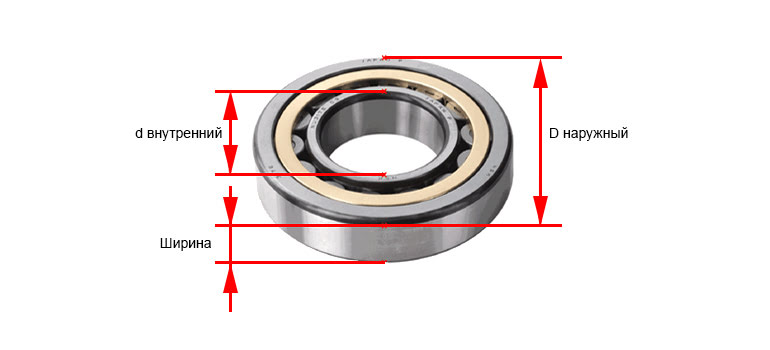
Inner Diameter: 10 mm
Outer Diameter: 26 mm
Width: 8 mm
Typical Use: Small motors, sensors, light mechanisms
Bearing No. 6001
12 × 28 × 8 mm
Light conveyors
Bearing No. 6002
15 × 32 × 9 mm
Small filling machines
Bearing No. 6003
17 × 35 × 10 mm
Medium packaging units
Bearing No. 6004
20 × 42 × 12 mm
Production line motors
Bearing No. 6005
25 × 47 × 12 mm
Industrial conveyors
Bearing No. 6006
30 × 55 × 13 mm
Heavy shafts
Bearing No. 6007
35 × 62 × 14 mm
Large packaging lines
Bearing No. 6008
40 × 68 × 15 mm
Heavy-duty motors
Bearing No. 6204
20 × 47 × 14 mm
Pumps and mixers
Bearing No. 6205
25 × 52 × 15 mm
Medium packaging machines
Bearing No. 6206
30 × 62 × 16 mm
24/7 continuous lines
Bearing No. 6305
25 × 62 × 17 mm
Very heavy loads
Selecting Bearings by Factory Application
4
Light conveyors
Recommended Type: Deep Groove
Common Sizes: 6001–6003
Reason: High speed with low energy consumption
Automatic packaging machines
Recommended Type: Reinforced Deep Groove
Sizes: 6204–6206
Reason: Continuous operation durability
Main motors
Recommended Type: Angular Contact
Series: 7200
Reason: Higher stability and side-load capacity
Long shafts
Recommended Type: Self-Aligning
Series: 1200
Reason: Prevents misalignment vibration
Pumps and compressors
Recommended Type: Heavy Duty / 6300 Series
Reason: Withstands high pressure loads
Professional Tips for Choosing the Right Bearing Size
Never select based on diameter only — calculate load and RPM
Use sealed types (ZZ or 2RS) in dusty or wet environments
For 24/7 factories choose heavy-duty grades
Avoid mixing similar sizes to prevent vibration
Always buy genuine brands
Use high-quality bearings for high-speed packaging lines to maximize efficiency
Common Mistakes That Cause Early Bearing Failure
Poor installation or misalignment
Over-greasing or under-greasing
Using undersized bearings
Choosing the wrong type for speed
Buying low-cost commercial copies
These errors often lead to:
Production stoppage + daily financial losses + emergency repairs
Global Brand Comparison (Industrial Grade)
Size 6204
SKF 6204-ZZ
NSK 6204ZZ
FAG 6204-2Z
KOYO 6204ZZ
Best for high-speed conveyors
Size 6205
2RS sealed versions
Ideal for dusty or wet areas
Size 6206
Heavy continuous operation
Size 6305
Extra heavy loads
All these brands provide:
Longer life
Lower noise
Higher stability
Better performance in high-speed production lines
How Bearings Work Inside Factory Equipment
4
Inside every modern factory, bearings are the hidden heart of motion.
They enable:
Lower friction
Higher speed
Reduced energy costs
Motor protection
Stable 24/7 operation
A wrong selection means:
Premature wear + vibration + full production shutdown + daily losses
Quick Engineering Summary
If you operate:
Packaging factories
Food processing lines
Plastic or chemical plants
Any continuous production system
Choosing the correct bearing is not just spare parts purchasing — it is a profitability decision.
Right size equals:
Stable operation
Less downtime
Longer service life
Higher productivity
Lower maintenance cost
If you’d like, I can next convert this into a professional PDF catalog, printable poster chart, Excel size sheet, or SEO landing page for your website. Just tell me the format and I’ll prepare it immediately.